
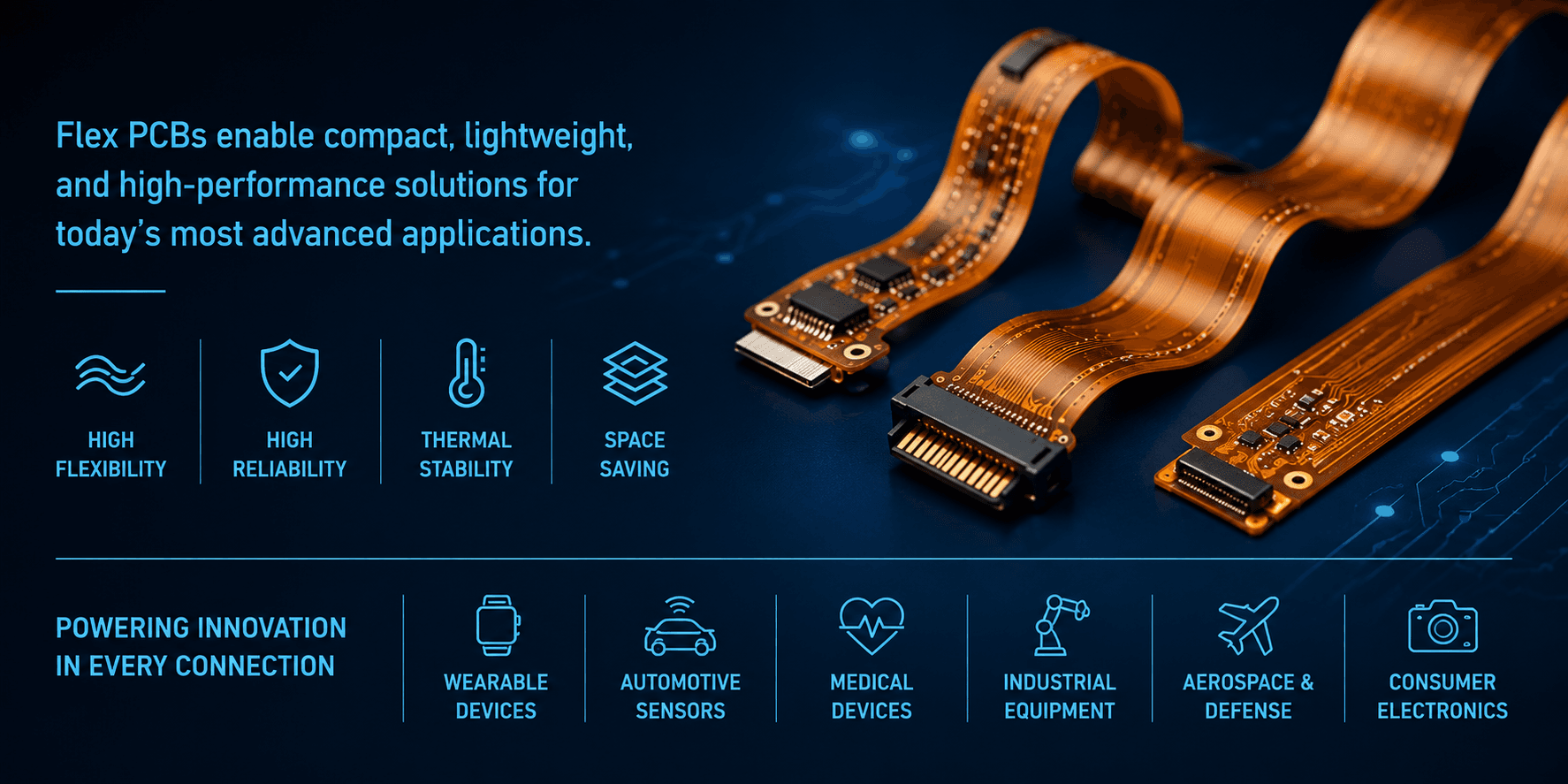
Flex PCB
At Orbis Electrica, our Flexible Printed Circuit Boards (Flex PCBs) are engineered for applications where mechanical flexibility, space efficiency, and reliability under motion or confined spaces are required. Flex PCBs combine electrical performance with flexibility, enabling innovative design solutions that rigid boards cannot achieve. They are ideal for compact, lightweight electronics and assemblies with dynamic movement or 3D form factors.
What Is a Flex PCB?
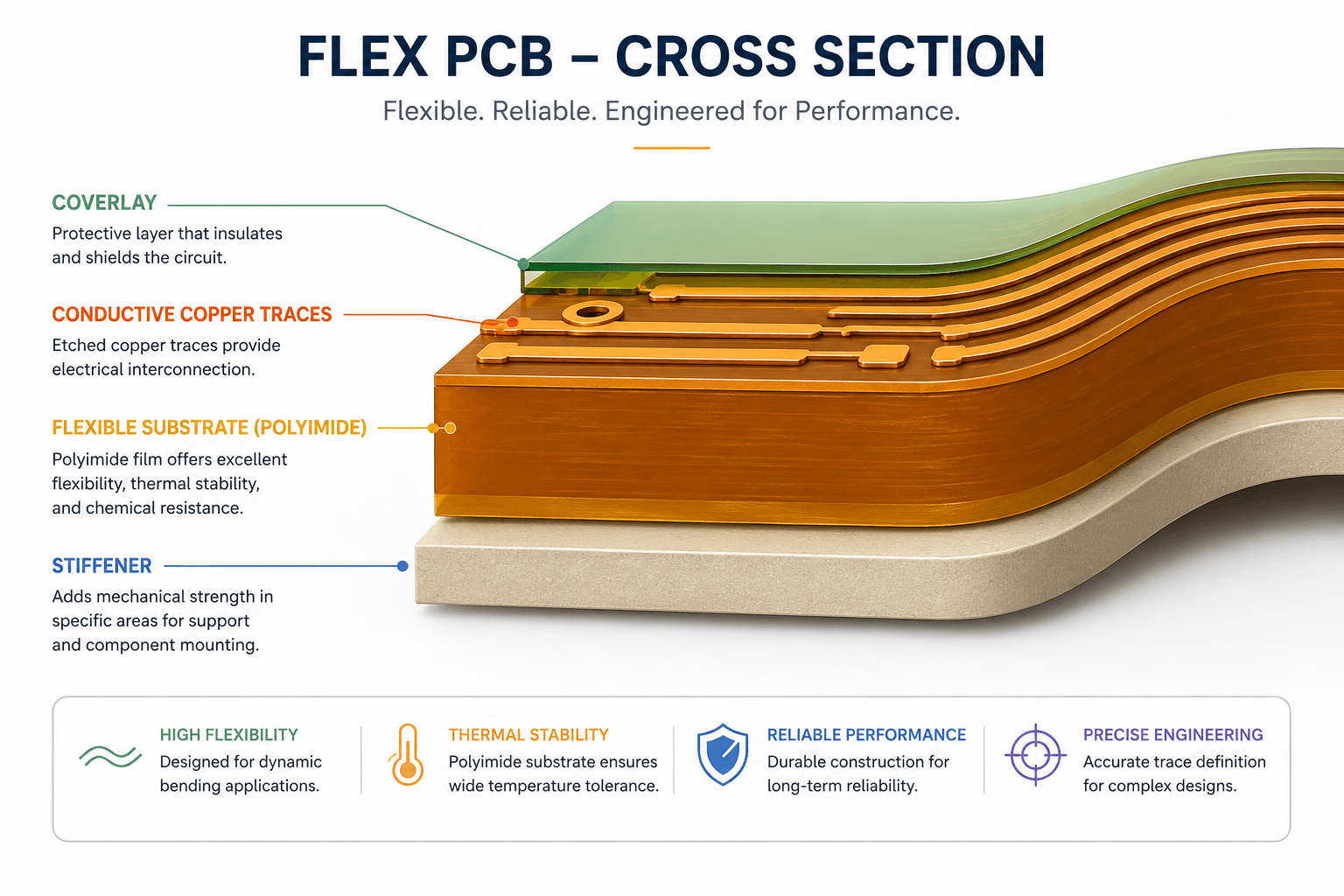
A Flexible PCB (FPCB) uses flexible insulating materials commonly polyimide or polyester — as the board substrate instead of rigid FR4. Conductive copper traces are bonded to this flexible base, then protected with coverlay or flex-compatible solder mask layers. This construction allows the board to bend, twist, and conform to complex shapes while maintaining reliable electronic connectivity. Flex PCBs can be designed as: • Single-sided (one conductor layer) • Double-sided (two conductor layers) • Multilayer flex (three or more flexible conductor layers) • Rigid-Flex (intentionally combining rigid and flexible sections in one assembly)
Key Benefits
Space & Weight Savings
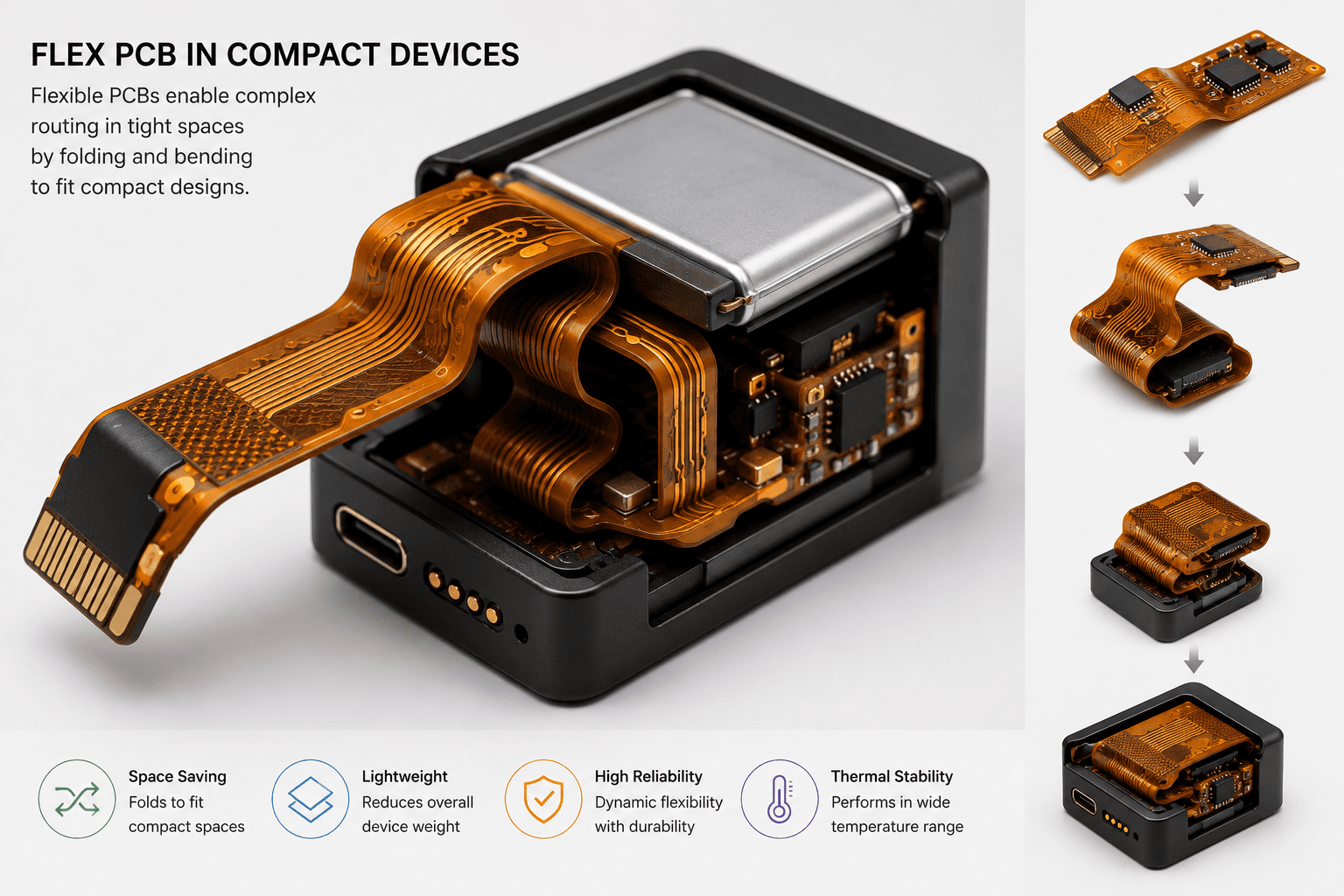
Flex PCBs eliminate bulky connectors and wiring harnesses, allowing circuits to fold or bend around components and fit into tight spaces — crucial for compact and portable electronic products.
Impressive Flexibility & Movement
Designed to withstand repeated bending and mechanical movement without fatigue, flex PCBs deliver high reliability in dynamic environments such as robotics, wearable devices, and moving mechanical assemblies.
Lightweight Construction
Thin flexible substrates significantly reduce overall product weight, helping in applications like aerospace, automotive electronics, and wearable tech where every gram matters.
Improved Reliability & Reduced Failure Points
With fewer connectors and solder joints, flex PCBs reduce potential points of failure. Their continuous copper traces and durable materials withstand vibration, shock, and thermal cycling better than traditional wiring solutions.
Design Freedom & Innovative Packaging
The ability to bend or fold circuits enables unique 3D packaging and innovative product designs not possible with rigid boards, opening up possibilities for advanced form factors and ergonomic electronics.
Typical Applications
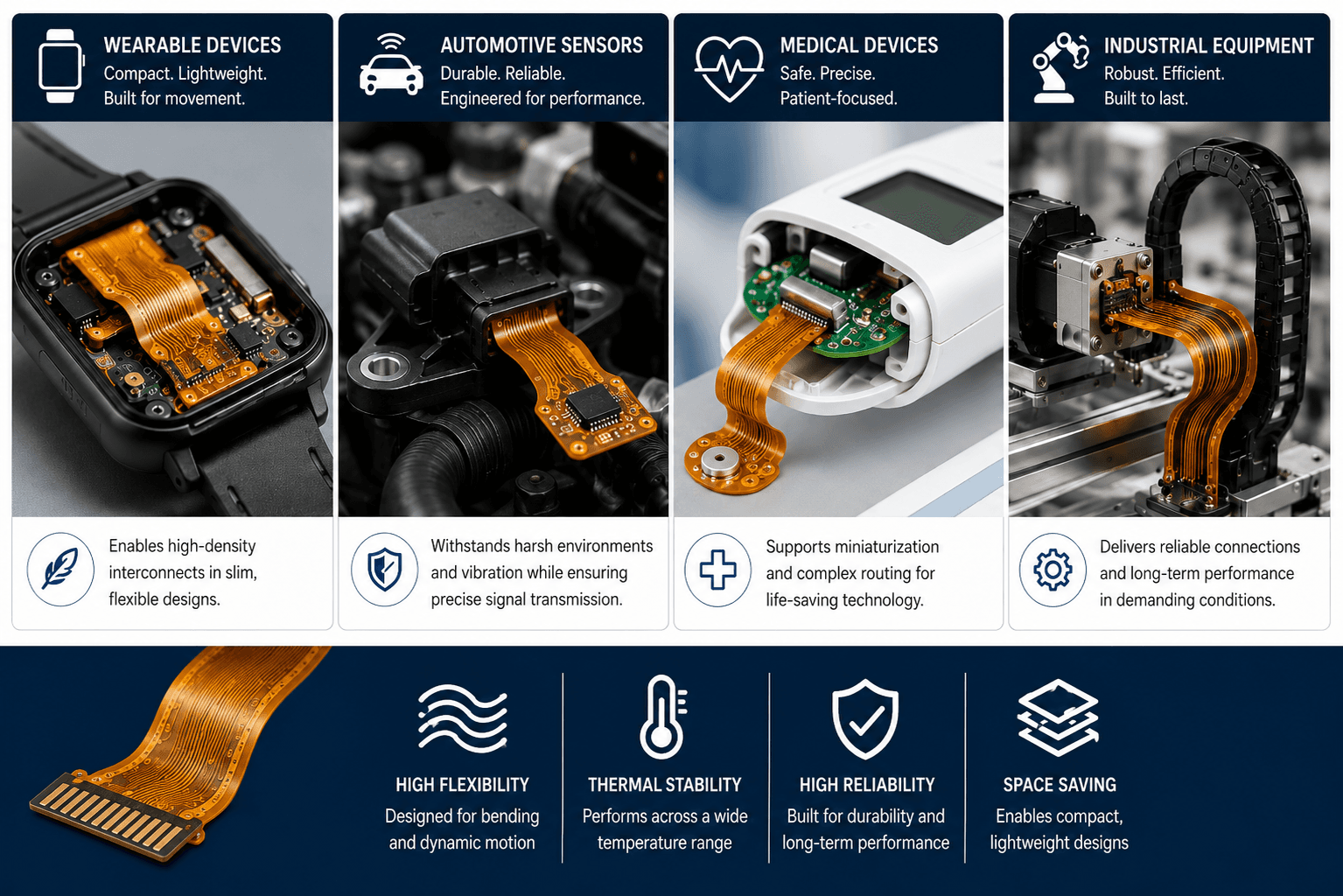
Flex PCBs are used across industries where mechanical movement, space limitations, or lightweight design are key drivers:
- Consumer Electronics: Smartphones, wearables, tablets
- Automotive: Dynamic sensors, infotainment, lighting systems
- Medical Devices: Hearing aids, diagnostic instruments, implants
- Industrial & Robotics: Motion joints, actuators, compact controllers
- Aerospace & Defence: Avionics, UAV systems, navigation modules
- Edge Devices & IoT sensors with compact packaging
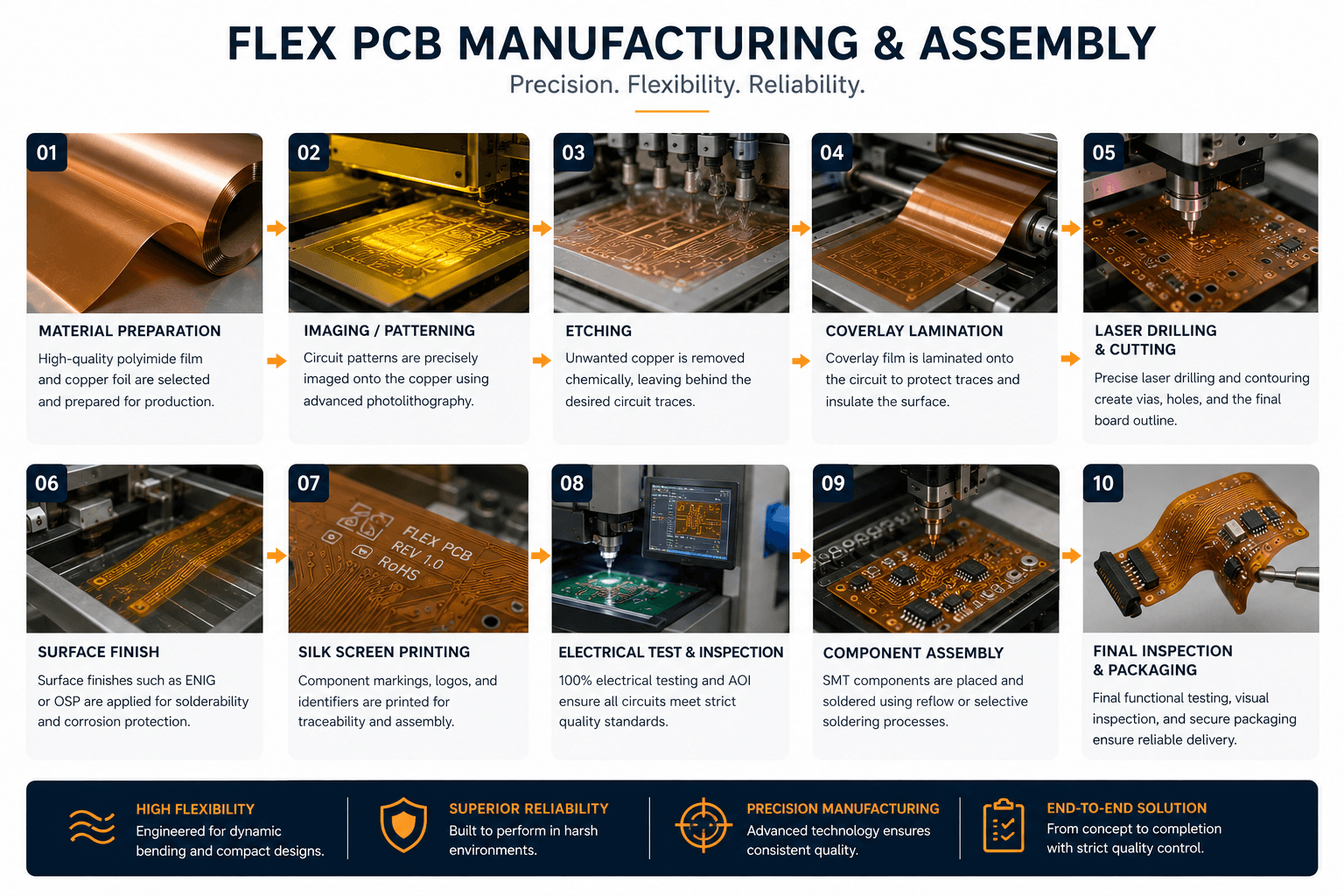
Customisation & Manufacturing Expertise
At Orbis Electrica, we deliver flex PCB solutions custom-tailored to your design needs whether for rapid prototyping, small runs, or full production. Our services include:
- • Material selection (polyimide, PET, specialized films) for flexibility and environmental durability
- • Layer stackup design for controlled performance and flex life
- • Design for Manufacture (DFM) for reliability under dynamic use
- • Flexible routing, bend planning, and strain relief integration
- • Rigid-flex integration for hybrid assemblies needing both flexibility and rigid mounting zones
We partner with you to ensure your flex PCB not only meets electrical and mechanical requirements but also performs reliably in its target environment — from prototype to production